canto amor

・ World premiere: March 2, 2012 ・

canto amor" - A music-theatrical dance project on the Orpheus myth

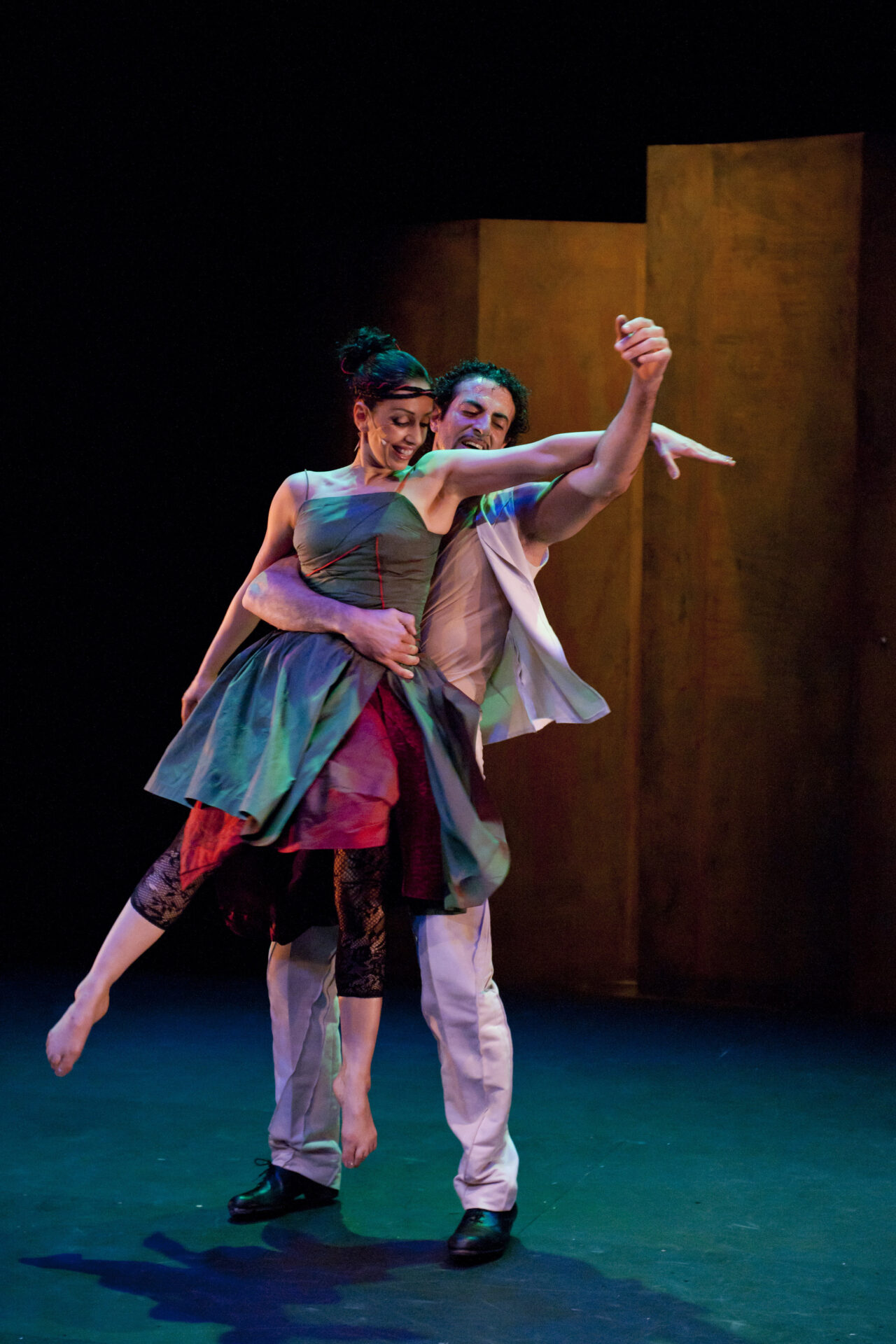
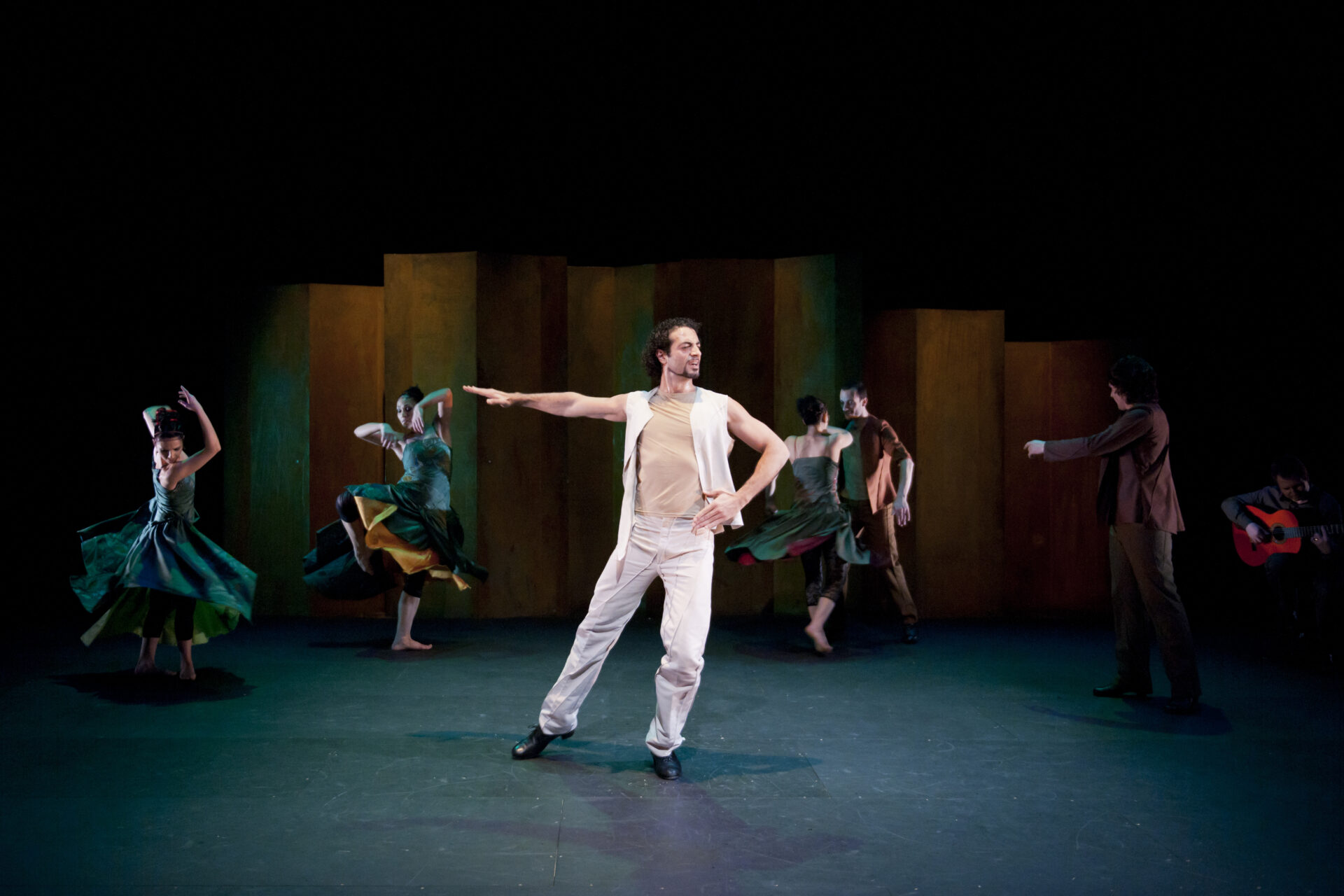
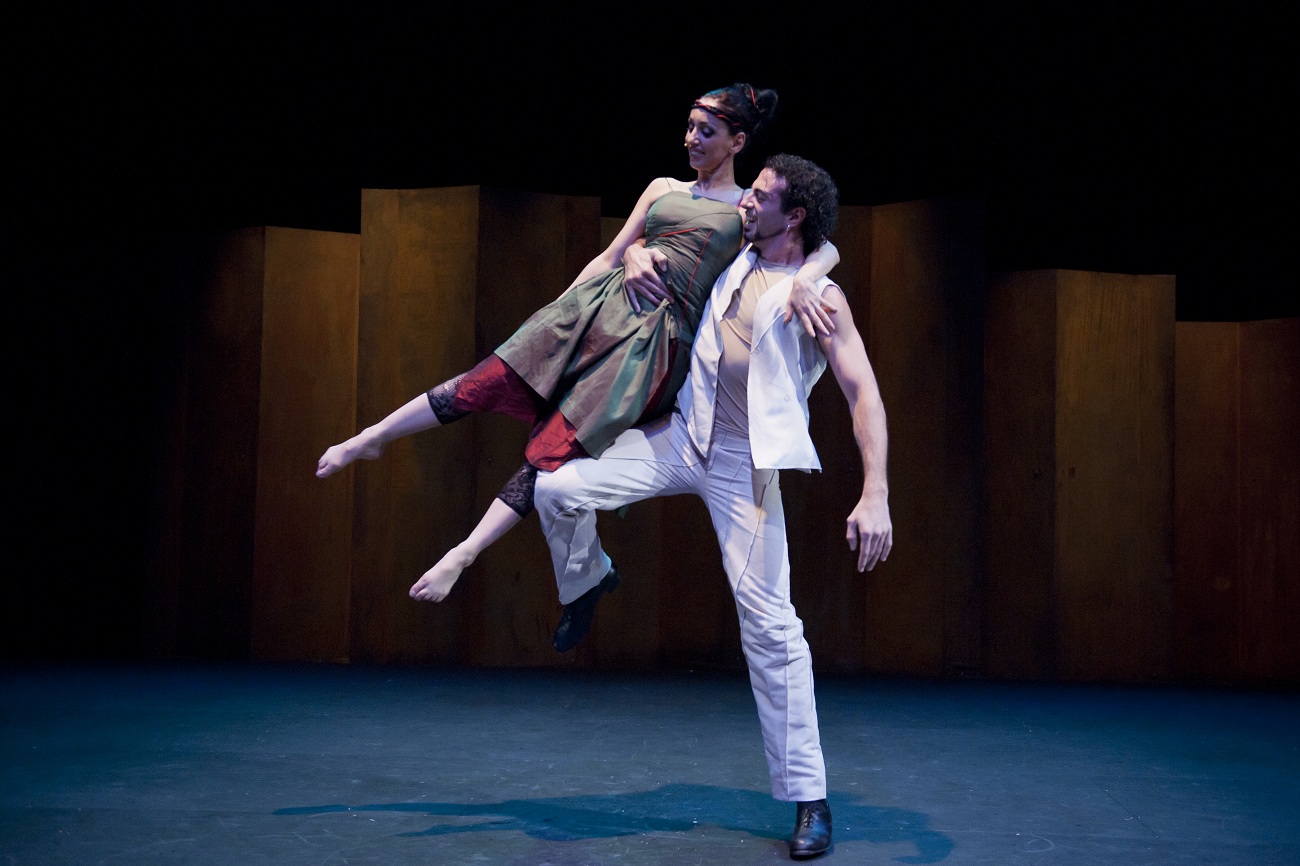
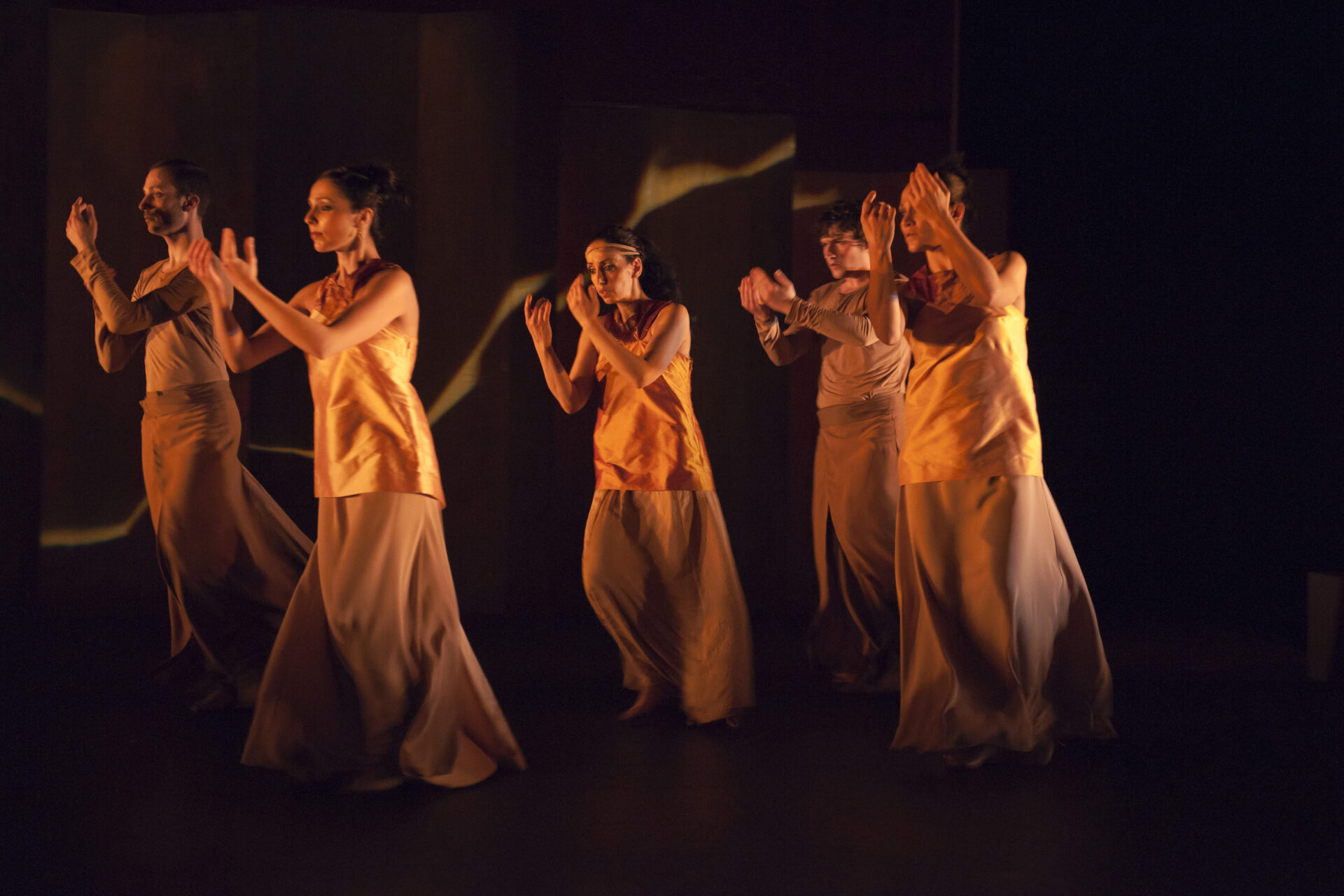
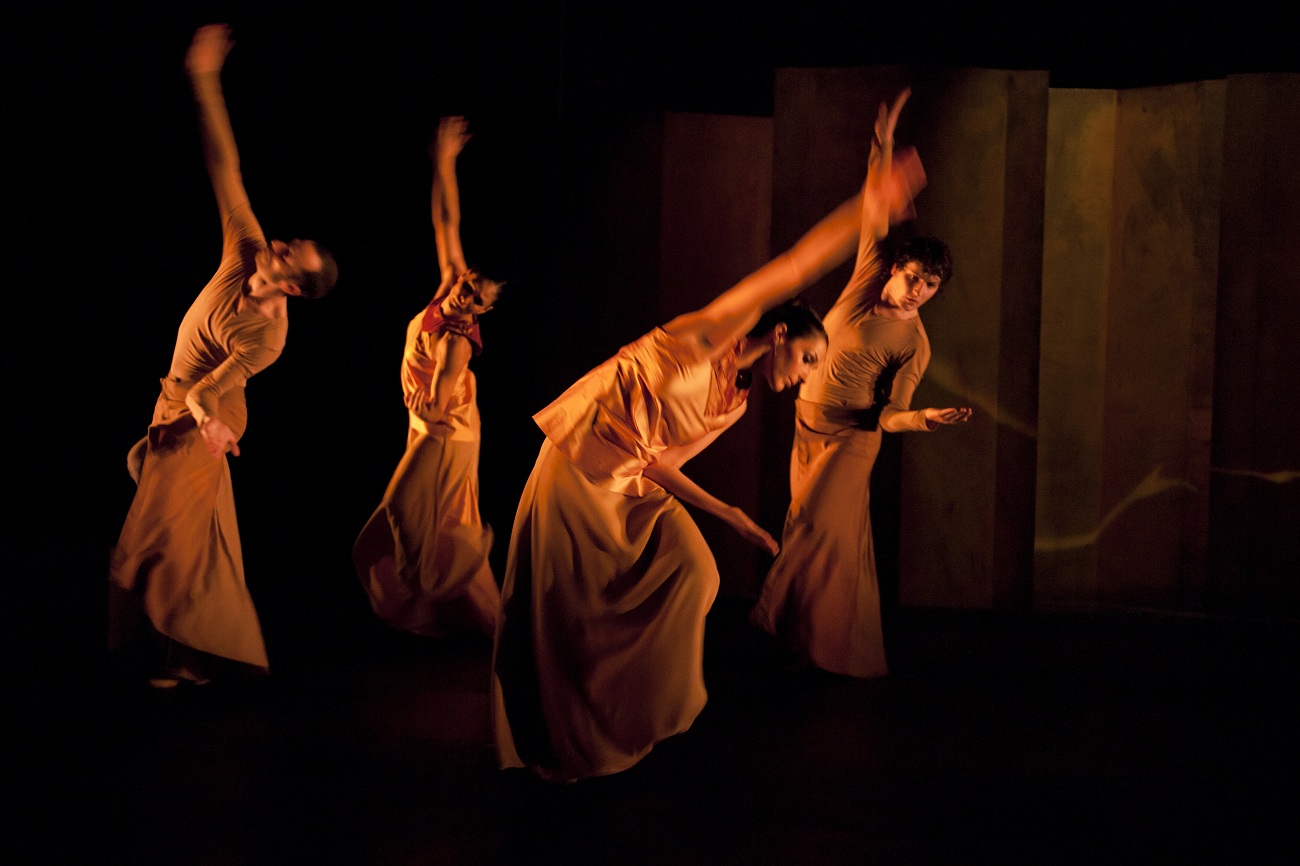
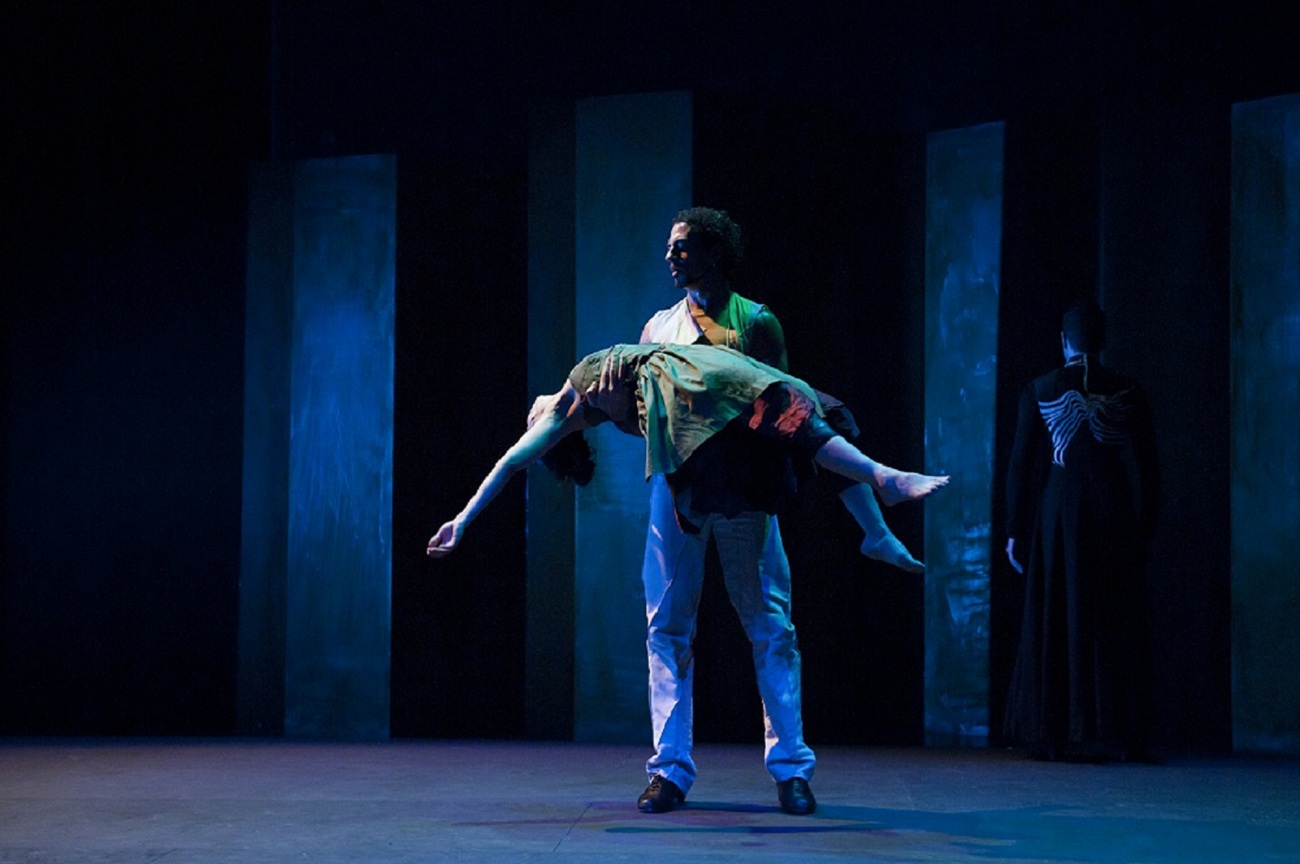
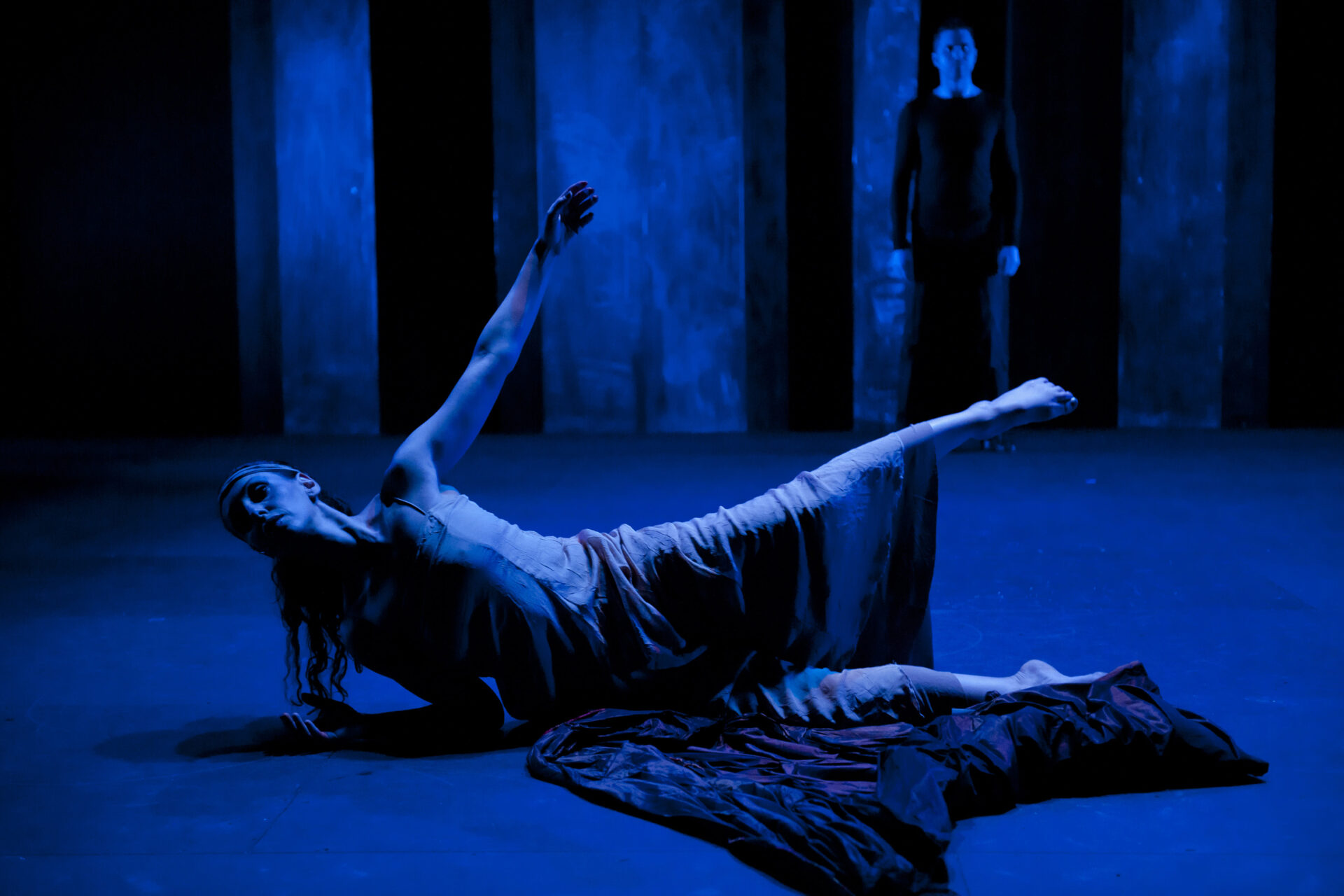
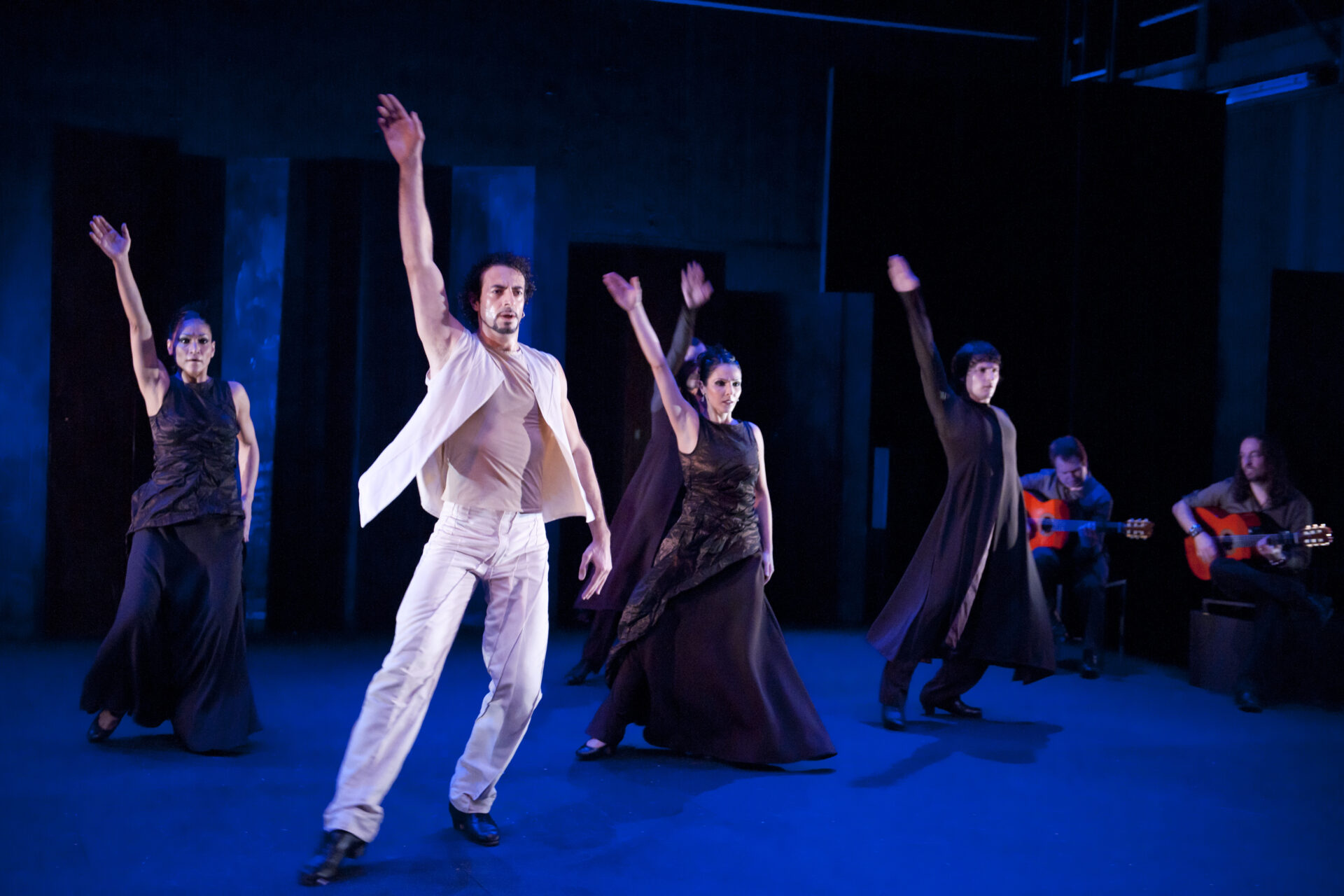
Choreography in five images. In the interpretation of the international dance and music ensemble Flamencos en route, the myth of the tragic love story of Orpheus and Eurydice is given a new interpretation. In a series of five images, Brigitta Luisa Merki's choreography presents her own take on the story handed down from ancient Greece. Through her death, Eurydice has found a new existence in a fascinating world of sound, in paradise, and does not want to be released from it. Orpheus searches for her in the realm of shadows and his longing reaches her. But she leads him back into the world with her song, strange and beautiful.

Source of inspiration: Excerpt from Rilke's poem: Orpheus, Eurydice.Hermes... She was in herself, like a high hope, and thought not of the man who went before, nor of the path that ascended into life. She was in herself. And her death filled her like fullness. Like a fruit of sweetness and darkness ...

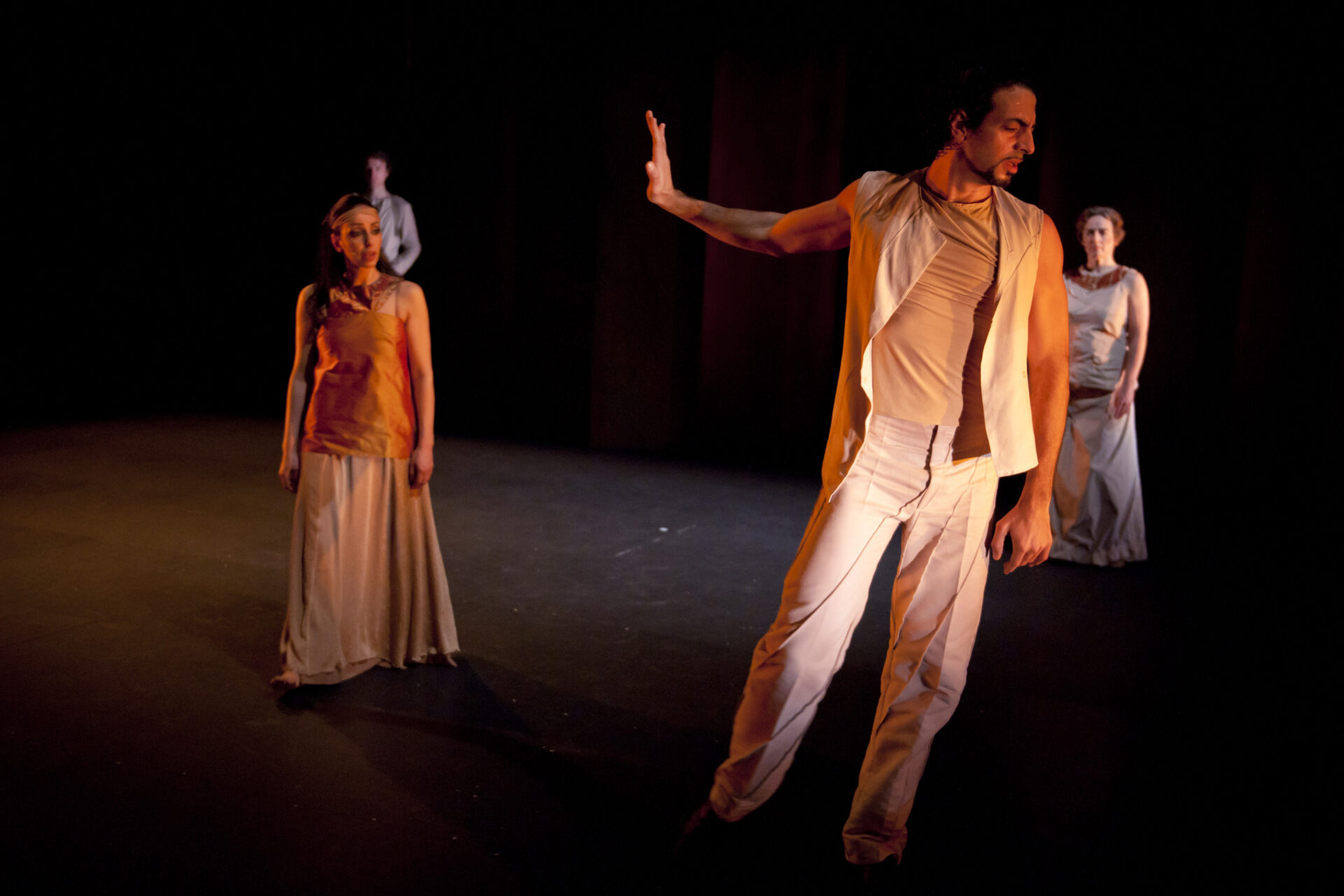
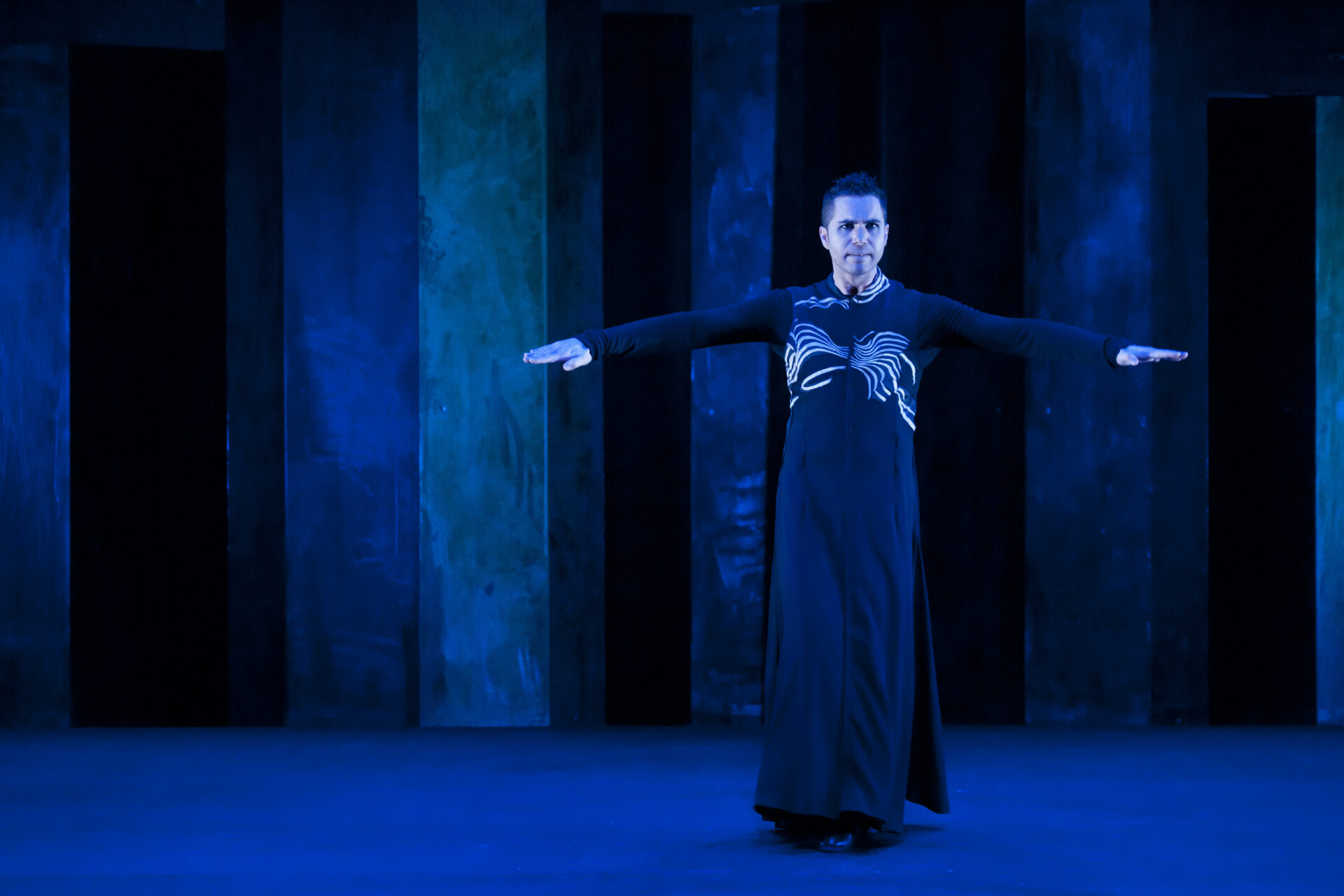
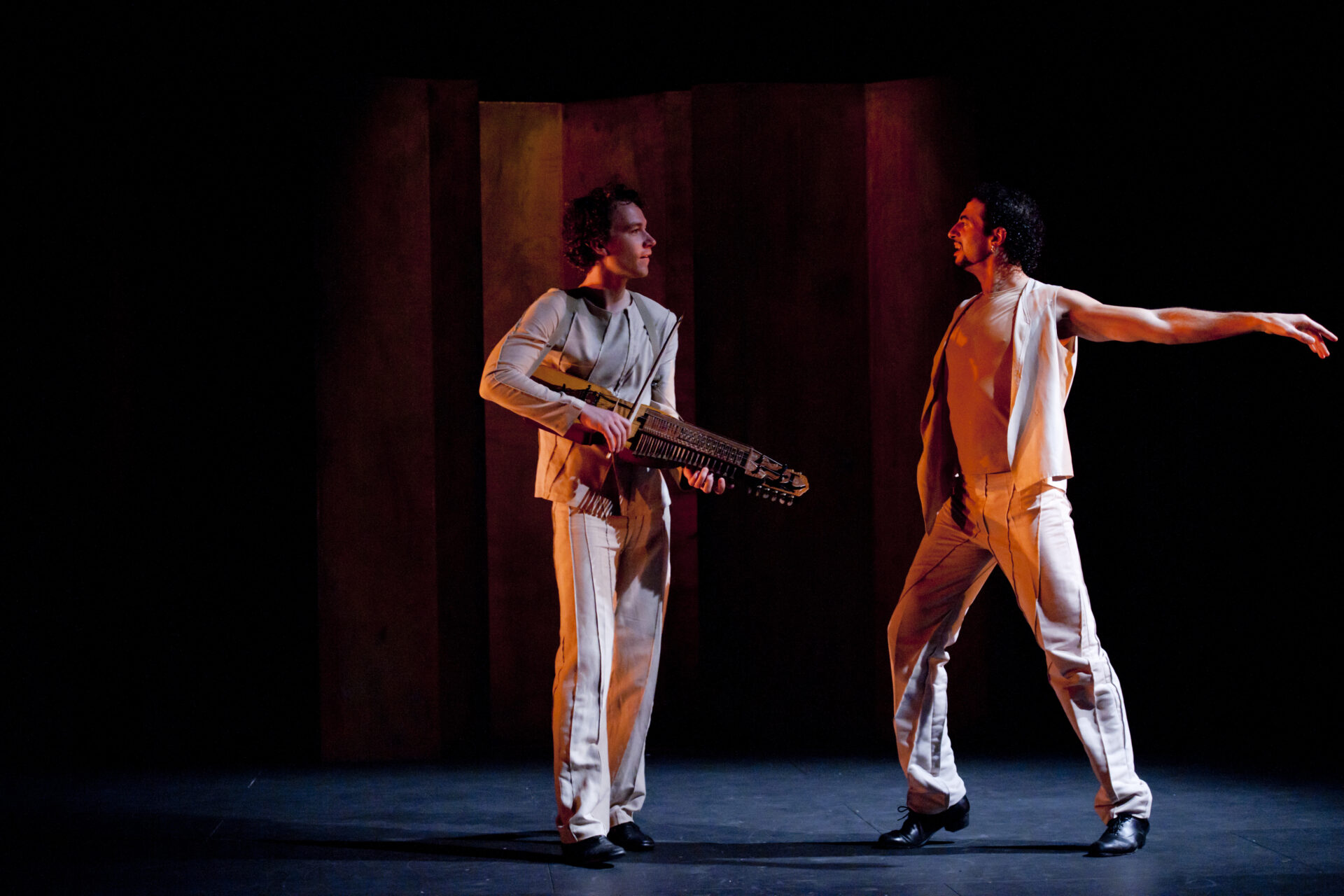
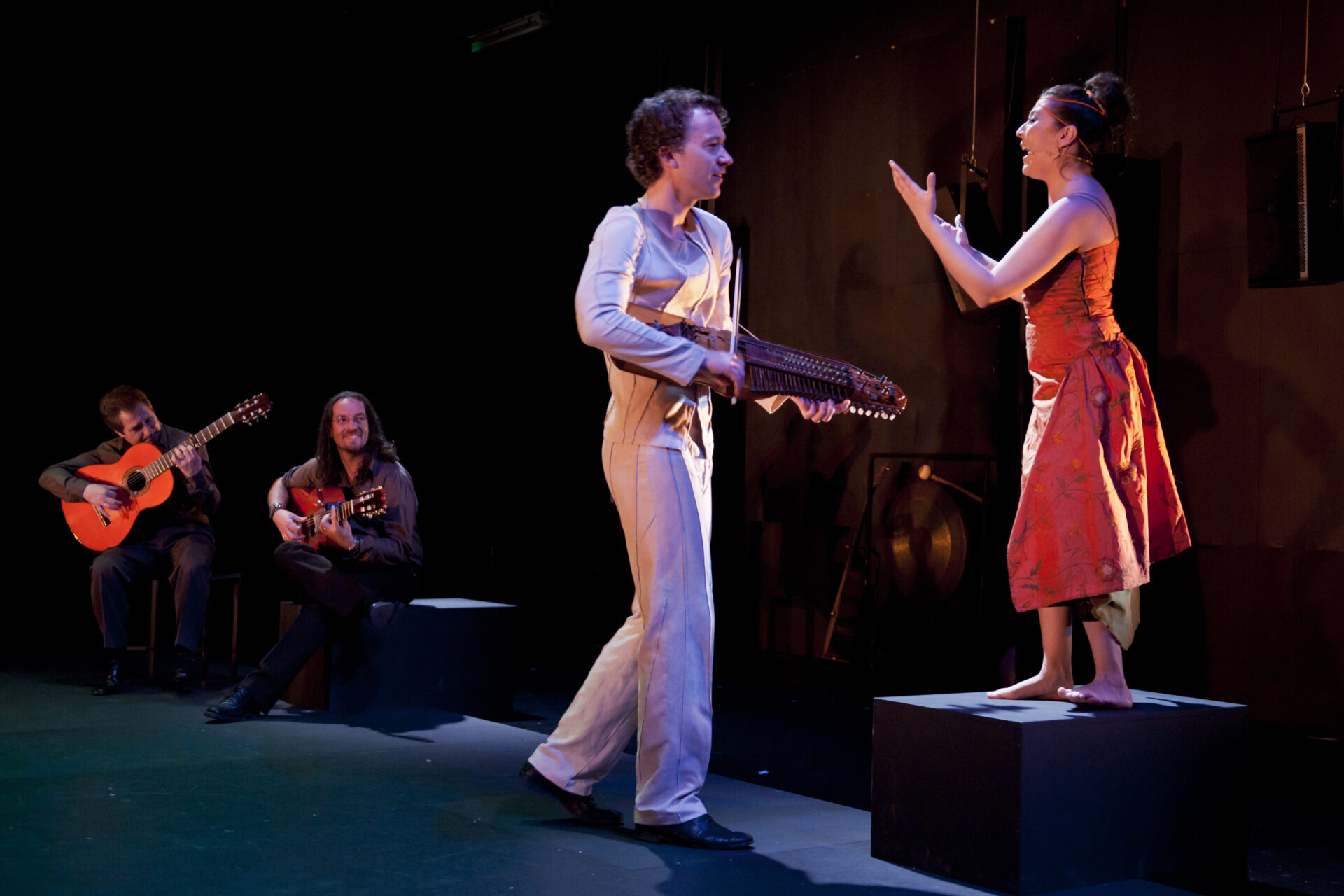
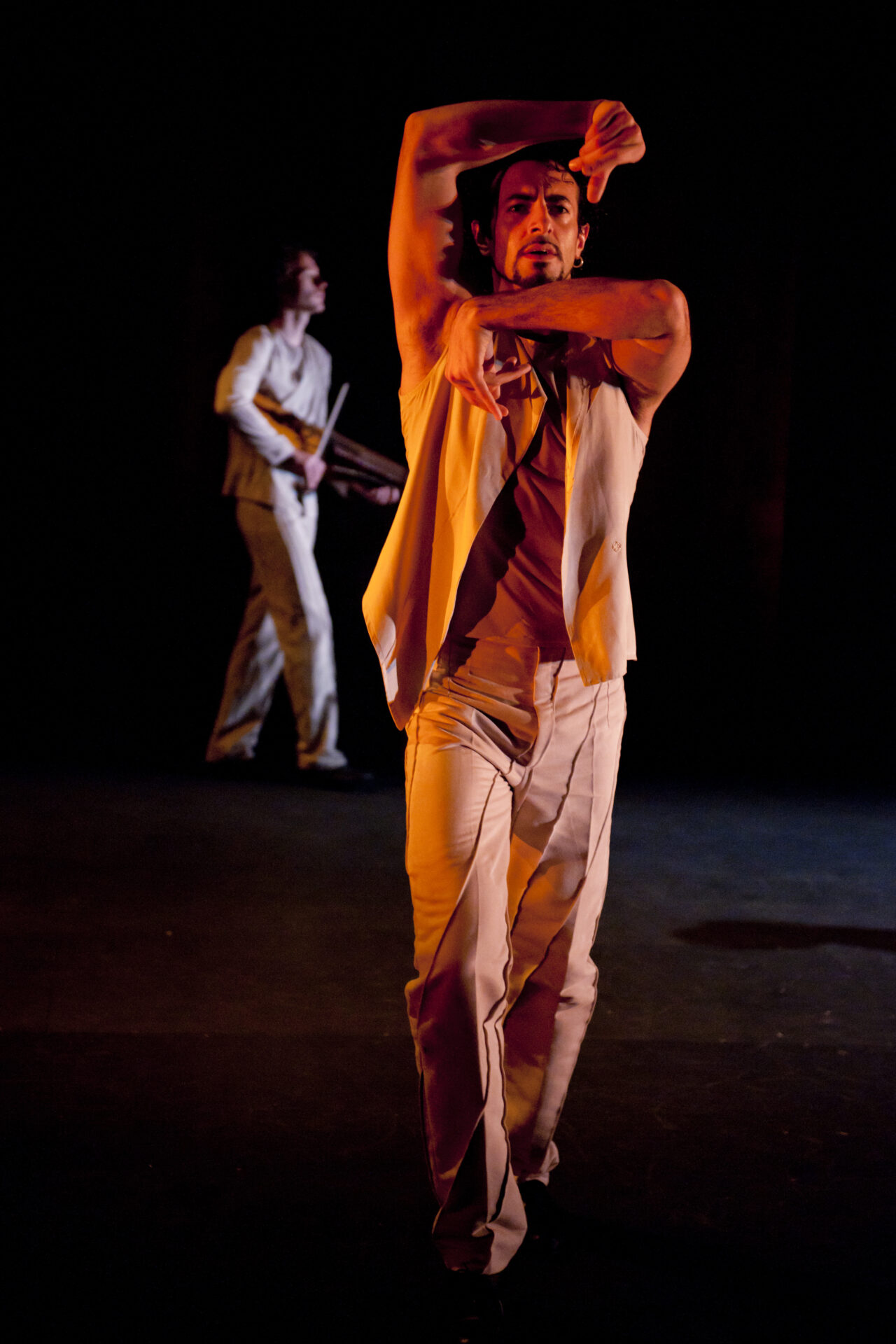
Orpheus is characterized by the flamenco dancer José Moro. Together with the Swedish violinist Erik Rydvall, who plays the medieval violin instrument nyckelharpa, he embodies the power of music. Eurydice is interpreted by Karima Nayt, the charismatic singer and contemporary dancer from Algeria. The figure of Death is unique, danced with great musicality and precision by Eloy Aguilar, whose interpretation is not associated with any sinister clichés.

Flamenco, oriental and contemporary western music interweave and create a unity.

Guitar
Singing
Nyckelharpa
Percussion
Costumes
Stage sculpture
Lighting design
Sound
Photos
Production management
Artistic direction
01.08.2012
Magazine Dance / Angela Reinhardt
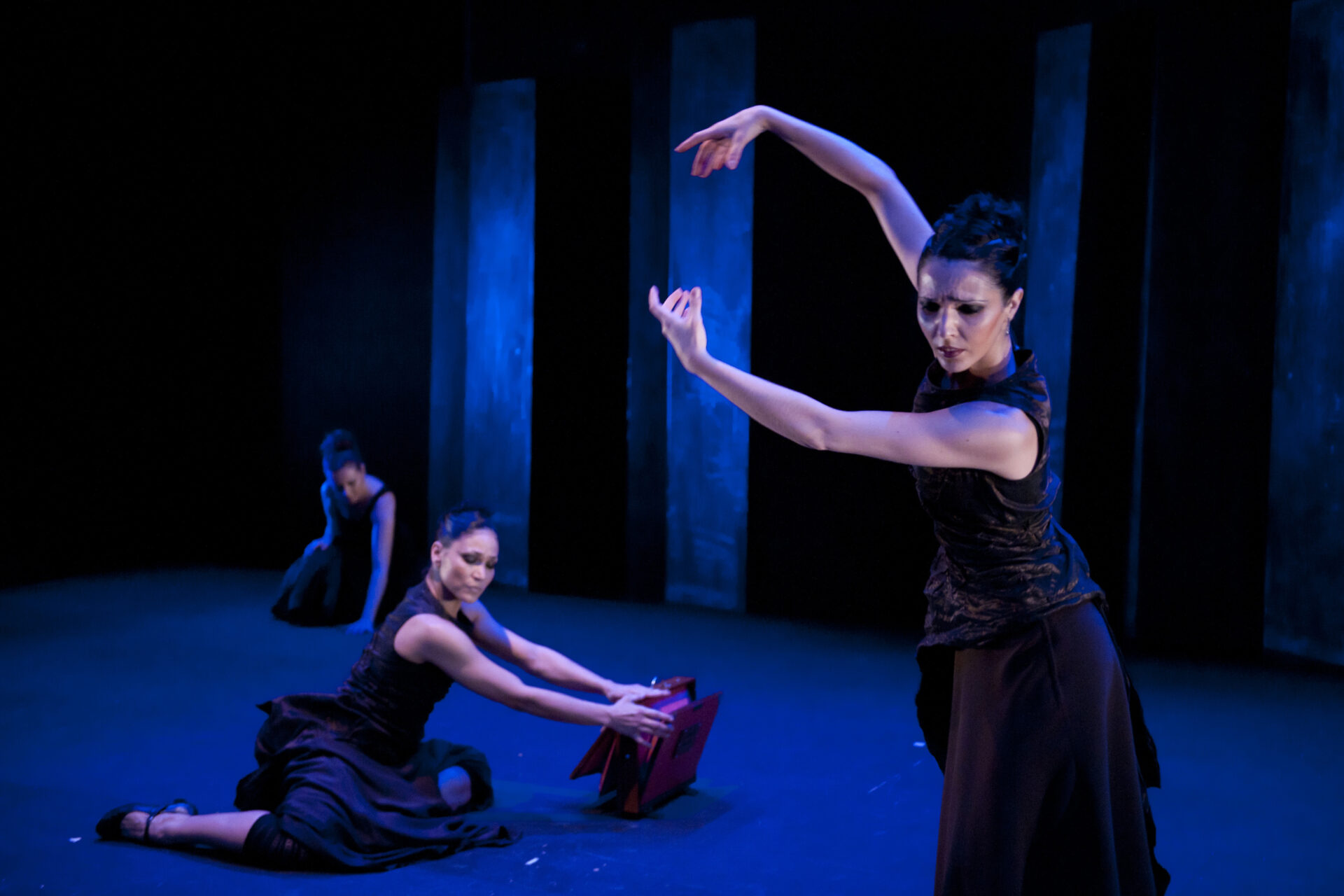
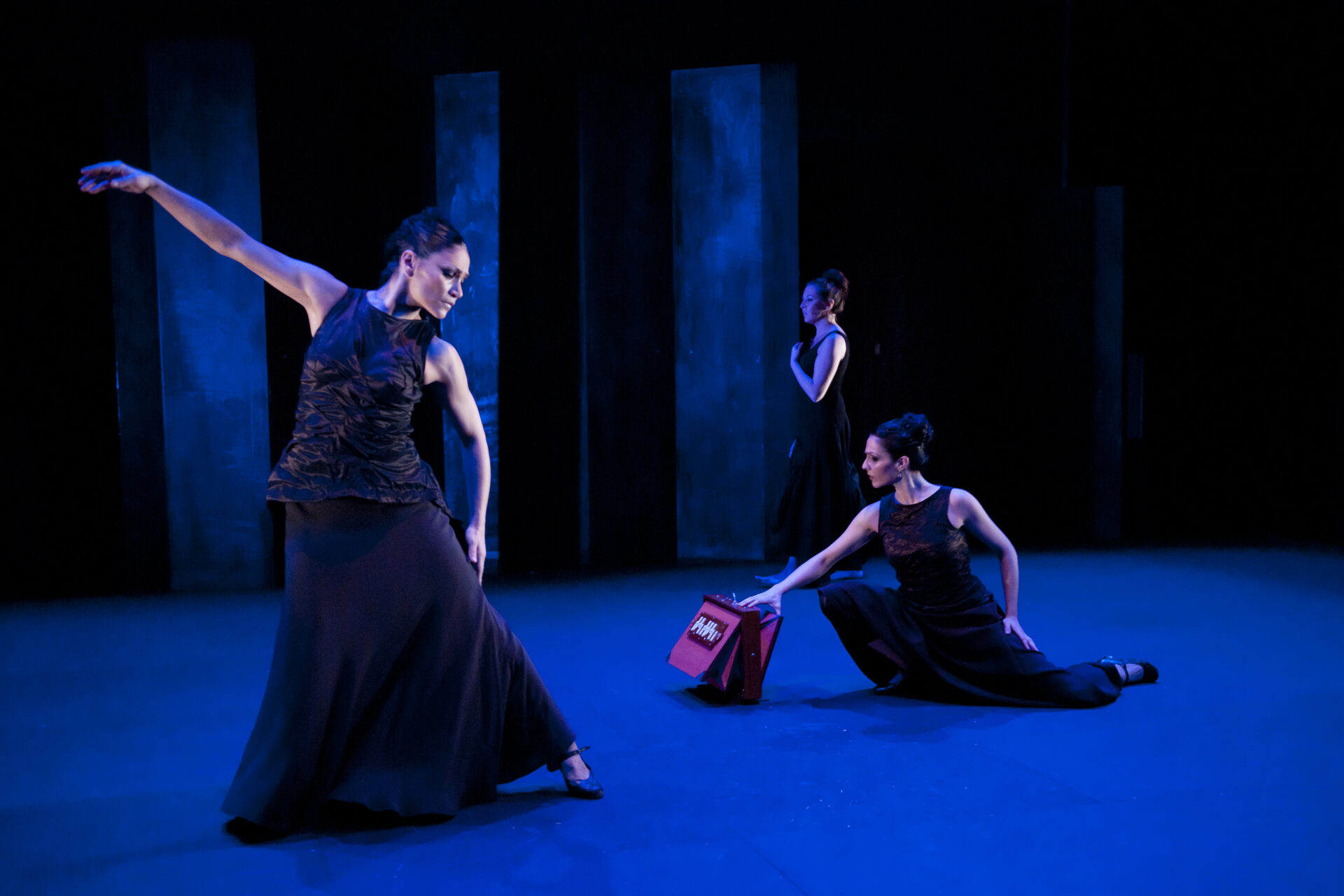
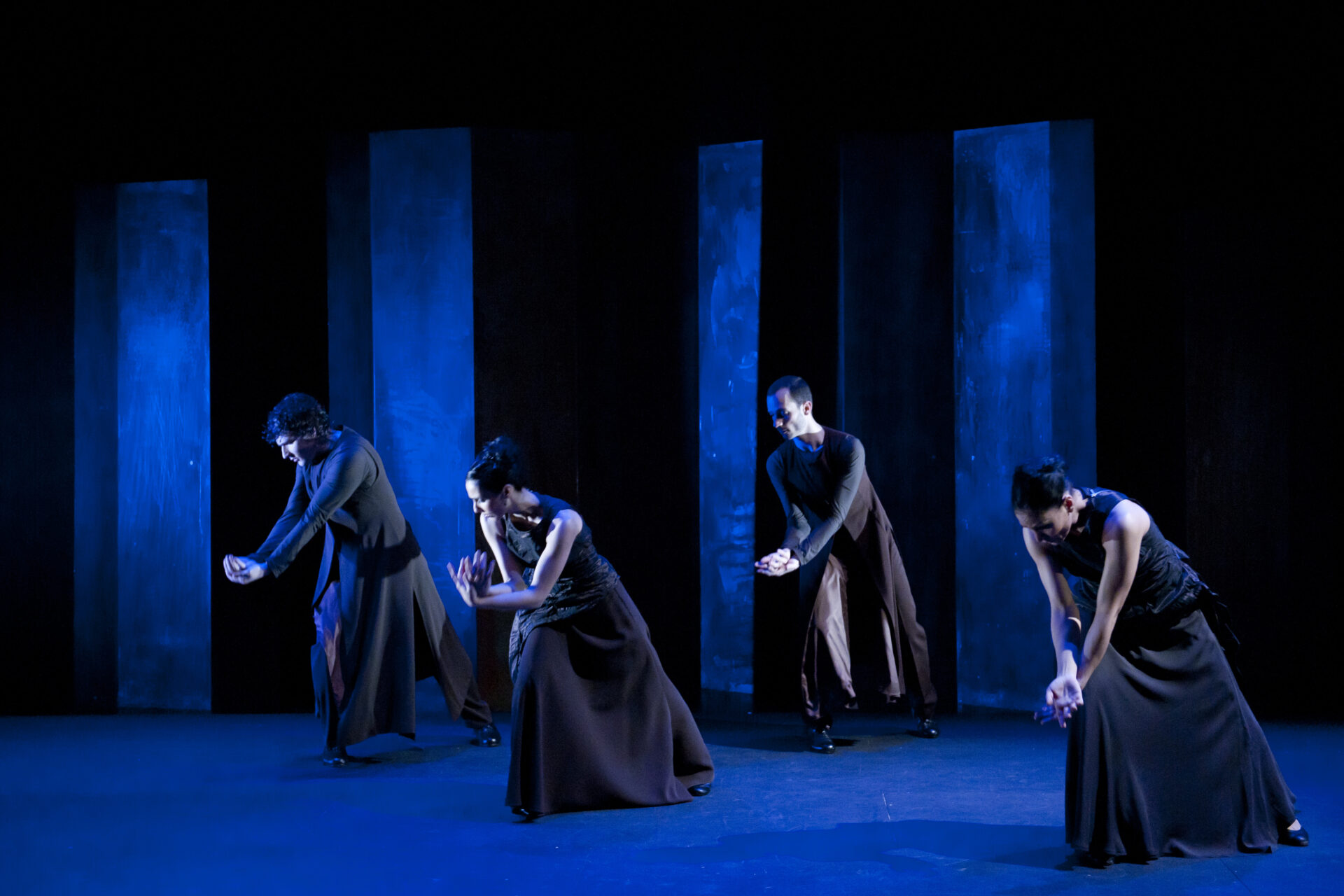
"Death is great. We are his laughing mouth ...", sings a soprano voice in shimmering melismas. Death swirls proudly across the dark stage, commanding and fascinating like a Spanish grandee. In one of the most unlikely forms of fusion, Rainer Maria Rilke's poetry and flamenco come together here to create a work that is much closer to Sidi Larbi Cherkaoui's theater of myths than to the virtuoso performances of Joaquin Cortes. Swiss choreographer Brigitta Luisa Merki and her company Flamencos en route have been working on the dramatization of flamenco for a long time. Now she tells the Orpheus myth in Rilke's otherworldly interpretation in strong, clear images, without ever losing sight of the earthiness of Spanish folklore and its tradition as an art created collectively in a circle. Merki complements the usual accompaniment, guitars and percussion, with a classical singer and the nyckelharpa, a Swedish keyboard fiddle. In this way, old instruments and modern sounds, classical singing and the rough laments of flamenco, traditional and free dance forms merge. Dancing, the charismatic Algerian Karima Nayt as Eurydice lures her lover, singing to comfort him after her death. The nyckelharpa always accompanies the lively Orpheus (Jose Moro), fiddling with nymphs and shepherds on stage and later mourning with him in the warm light of the world beyond, from which Eurydice, as in Rilke's poems, no longer wishes to return. The stage, costumes and lighting complement the suggestive, striking images with their softly glowing natural colors. Merki uses the vocabulary and structures of flamenco, incorporating its rapid climaxes in particular into her dramaturgy with astonishing effect, in exuberant, angry or demonic coloration. She organically complements the traditional alegrias or zapateados with leaps and tender lifts, ornaments become animated gestures, flamenco becomes dance theater. Orpheus' heels softly caress the floor and speak of his love; the dancers' arms also move more symbolically, but without ever lapsing into pantomime. The women mostly dance barefoot, in a modern, free style, sometimes the entire ensemble lies on the floor or falls into rhythmic speech. The initially exuberant Eurydice is transformed by Death into an enraptured, incomprehensible figure. Death, danced magnificently by Eloy Aguilar, breaks into the cheerful celebration as a sudden horror with hard, choreographed movements. At the end, he is no longer a threat, but a tempting seducer who triumphs in dark beauty and is accepted openly and joyfully, "laughing mouth" as in Rilke, in a shared dance.
05.03.2012
Stuttgarter Zeitung / Claudia Gass
... The story of Orpheus and Eurydice has already been interpreted many times in dance and opera; just think of Pina Bausch's legendary dance theater adaptation ... Is it possible to surprise and convince with a completely independent approach here? It can. And this is not even primarily due to the unusual form of flamenco dance for this subject matter, but quite decisively to the way Merki integrates different musical styles into the narrative in a meaningful and atmospheric way. She also sets a special accent in terms of content: Eurydice does not want to return to life, but to remain in paradise. ... The exciting interplay of dance and music creates intense, atmospheric, almost irresistible images. It is not only the fact that Eurydice (Karima Nayt) dances and sings that is extraordinary. The way the musicians (two guitarists, a percussionist and Erik Rydvall, who plays a violin) and the great singer Eva Nievergelt are subtly integrated into the action and accompany the seven dancers, virtually ensnaring them with their voices and sounds, is what makes this project so appealing, in which the interdisciplinary approach is actually more than just an outward assertion.
05.03.2012
Stuttgarter Nachrichten / Brigitte Jähnigen
... A pax de deux as beautiful as its performers, as intimate as the love that has been handed down by this historic couple. ... The Flamencos en route ensemble interprets the story of Orpheus and Eurydice in beautiful costumes by Carmen Perez Mateos. Not only Orpheus, but also the premiere audience is enchanted by the singing of Algerian artist Karima Nayt. And Eurydice is not the only one to be impressed by the wooing, devoted dance of her Orpheus - José Moro is a highly professional flamenco dancer whose pride captivates the audience. ... And Moro has a second musical self, the Swede Erik Rydvall, who is as gentle as he is fiery. Rydvall brings the nyckelharpa, a medieval violin instrument, into play. Brigitte Luisa Merki, the artistic director of the Swiss dance company, is known for giving traditional flamenco a contemporary appearance..... ... World music in the best sense of the word is created when flamenco guitars, nyckelharpa, cajon, Andalusian, oriental and contemporary classical vocals (this time featuring Eva Nievergelt) fuse together. Now the Swiss artist is not only reinterpreting traditional dance and music languages, but also the tragic myth of Greek antiquity. Inspired by Rainer Maria Rilke, Brigitta Luisa Merki's protagonist no longer needs to hope for redemption after her death. "Having arrived in heavenly laughter, paradise" (Merki), her strength is so great that even Orpheus - matured after his grief - begins a new life on earth without her. ... Casting Eloy Aguilar in the role of Death is magnificent. Elegant, dominating, majestic, Aguilar performs on the special flamenco floor, ruffles his skirts into cascading folds, pops syncopations from his shoes, fills the stage with his grandiose solo ...
05.03.2012
Esslinger Zeitung / Angela Reinhardt
The Orpheus myth with Flamencos en route at the Stuttgart Theaterhaus We are all familiar with the storms of enthusiasm for dance in Stuttgart's Theaterhaus, but not even Gauthier Dance has ever received such spontaneous, unanimous cheers. With their magnificent interpretation of the Orpheus myth, a dance theater in strong, poetic images by Brigitta Luisa Merki, the Swiss company Flamencos en route is now making a two-week guest appearance in Stuttgart. Basically, "Orpheus. Eurydice. Paradise" is basically a musical-theatrical production, merging folkloristic and operatic singing, old instruments and modern sounds, flamenco and free dance forms. Similar to the choreographic cosmopolitan Sidi Larbi Cherkaoui - and yet simpler, more earthbound than intellectually playful - Merki creates a new mythical theater with a clear symbolic language from a fusion of the most diverse styles and epochs, dominated by the dance vocabulary of flamenco, but whose expressive power goes far beyond its moodiness and virtuosity. The usual musical spectrum of flamenco - guitars, percussion and vocals - has been significantly expanded, for example to include the nyckelharpa, a Swedish keyboard fiddle that accompanies the singer Orpheus, or the melismas of classical singer Eva Nievergelt. Her voice contrasts mysteriously with the dark, rough singing of Algerian dancer Karima Nayt, who enchants and comforts her Orpheus by dancing and singing as Eurydice. Festival of the nymphs Abstract rocks border the square dance floor at the back, four low steles to the side. An atmospheric light floods all stages of the 75-minute story, from the spring-colored festival of the nymphs to the dark waters of the Styx to the warm orange of the world beyond, from which Eurydice does not want to return. Merki takes his cue from Rainer Maria Rilke's interpretation of the myth, showing Eurydice, initially full of life, as an almost angelic figure transformed by death. Death, danced magnificently by Eloy Aguilar, swirls dominantly and frighteningly into the cheerful party, but he is not a threatening figure, but an alluring seducer in his dark cloak. While the men, including the southern, lively Orpheus (José Moro), make use of flamenco techniques with clacking heels and proud posture, the women mostly dance barefoot in a modern, free style. The many lifts and long jumps are not really typical of flamenco; sometimes the entire ensemble is even on the floor. Nevertheless, just as in Spanish national dance, the choreographer repeatedly increases the tempo in rapid climaxes, and this dynamic always makes the action even more exciting. Merki is always able to give the flamenco a different coloration - from the rural, innocent cheerfulness of the nymphs to the harsh, chiseled gloom of death, which triumphs in slow, concise turns and then escalates into a frenzied whirl. Even the lament of the mourning Orpheus for his beloved can be expressed with the fine hand movements of Spanish dance. Without lapsing into pantomime, Merki tells of love, grief and transfiguration, even showing the prohibition of speech in the realm of death and proving that it is possible to tell a story in a purely virtuoso, highly formalized dance form - sometimes one wishes Christian Spuck could see this, who fails to do so in his "Fräulein von S.". Towards the end, the almost unearthly voice of the soprano rises out of the Spanish guitar sounds with a Rilke poem: "Death is great. We are his laughing mouth ..." - the music of the four magnificent instrumentalists here almost sounds like Gustav Mahler. At the end, death triumphs in dark beauty, everyone joins in and dances with it full of joy, accepting it openly and joyfully.
02.03.2012
World premiere
EN
Stuttgart
Theater house
03.03.2012
EN
Stuttgart
Theater house
04.03.2012
EN
Stuttgart
Theater house
06.03.2012
EN
Stuttgart
Theater house
07.03.2012
EN
Stuttgart
Theater house

Tab Content

This is a basic text element.
Dance company
Flamencos en route
P.O. Box 224
CH-5401 Baden